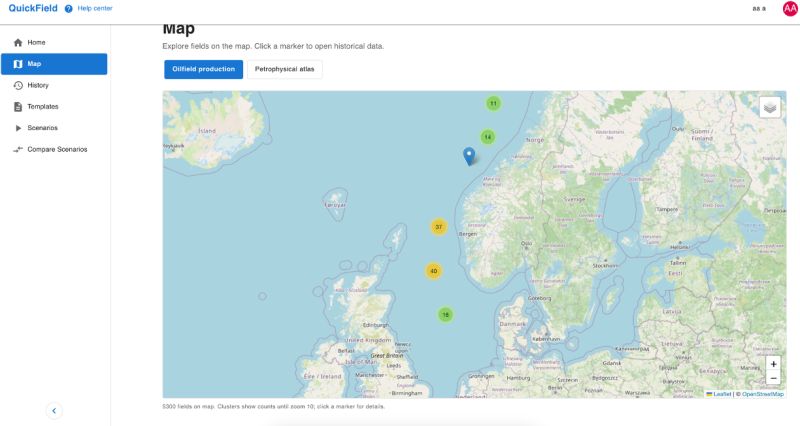
Norwegian Oilfields Join QuickField
Norway's offshore is in: We are at 5,300 oilfields now, each processed for decline curves ready to drive forecasts.
Read the post →Blog
Release notes, forecasting method, and what we keep learning from the data — collected from our LinkedIn feed.
Topic
Author
Norway's offshore is in: We are at 5,300 oilfields now, each processed for decline curves ready to drive forecasts.
Read the post →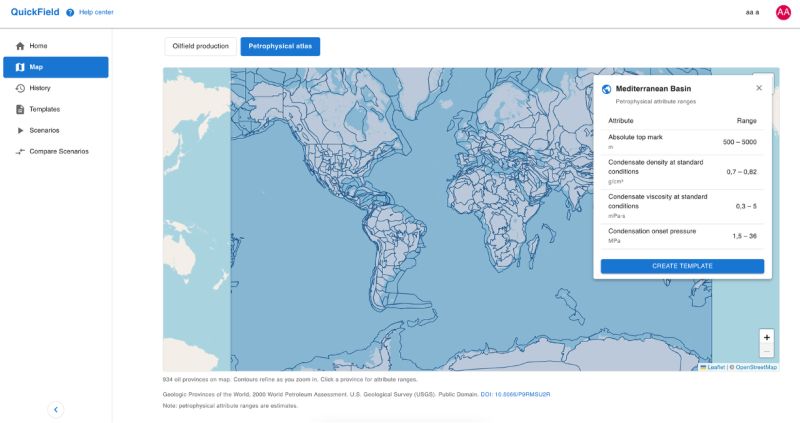
Petrophysical attributes now cover the whole world — pick any point on the Atlas map and turn it into a template.
Read the post →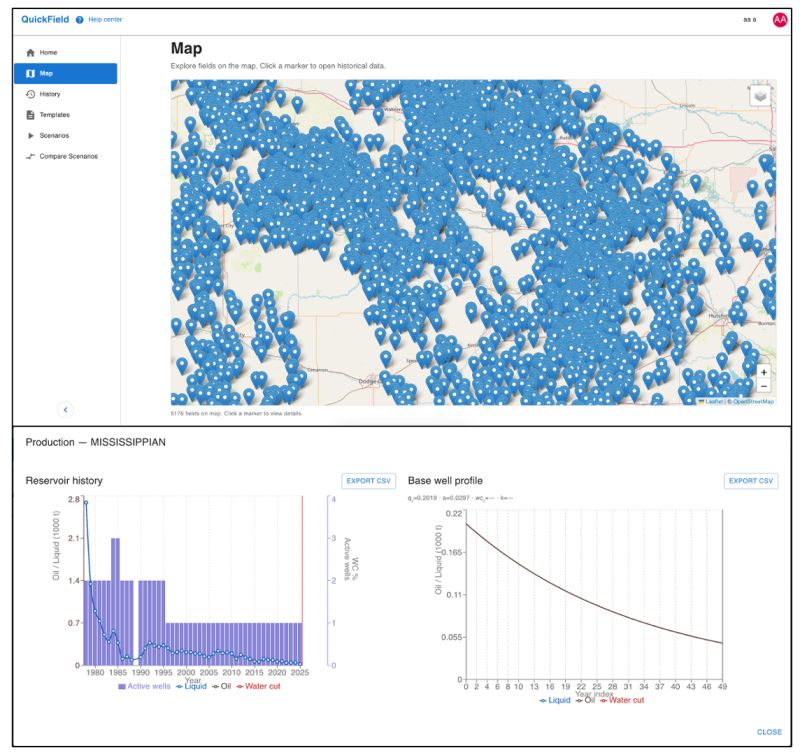
Roughly 5,000 US oil deposits added, each processed into base well decline curves you can use directly.
Read the post →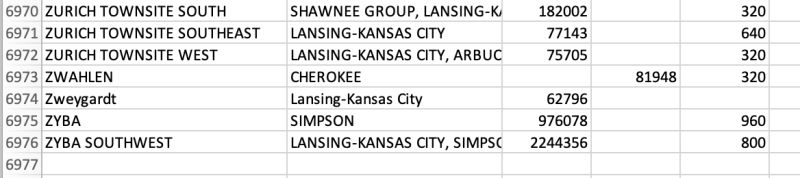
Open access to historical data struck a nerve. A note on the response, and a promise of much more to come.
Read the post →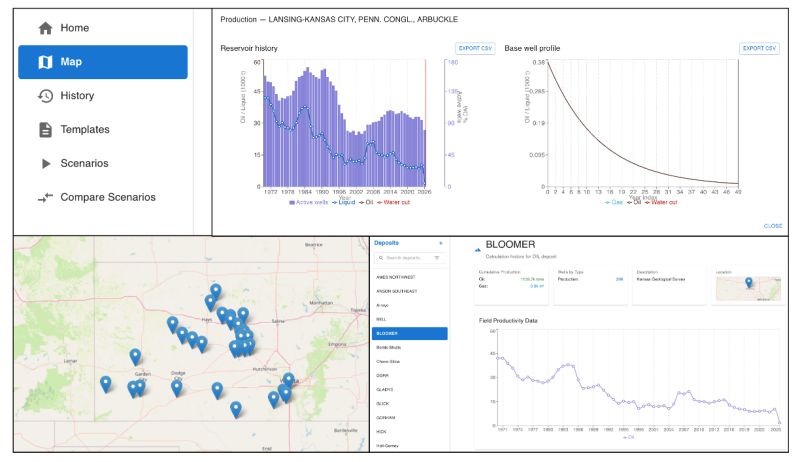
QuickField now serves historical production data, not just simulation — explore, export, or import your own.
Read the post →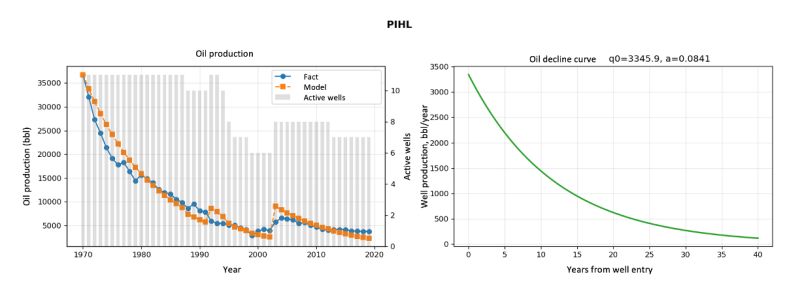
How well-level production is decomposed out of reservoir-level public data, using fitted decline curves.
Read the post →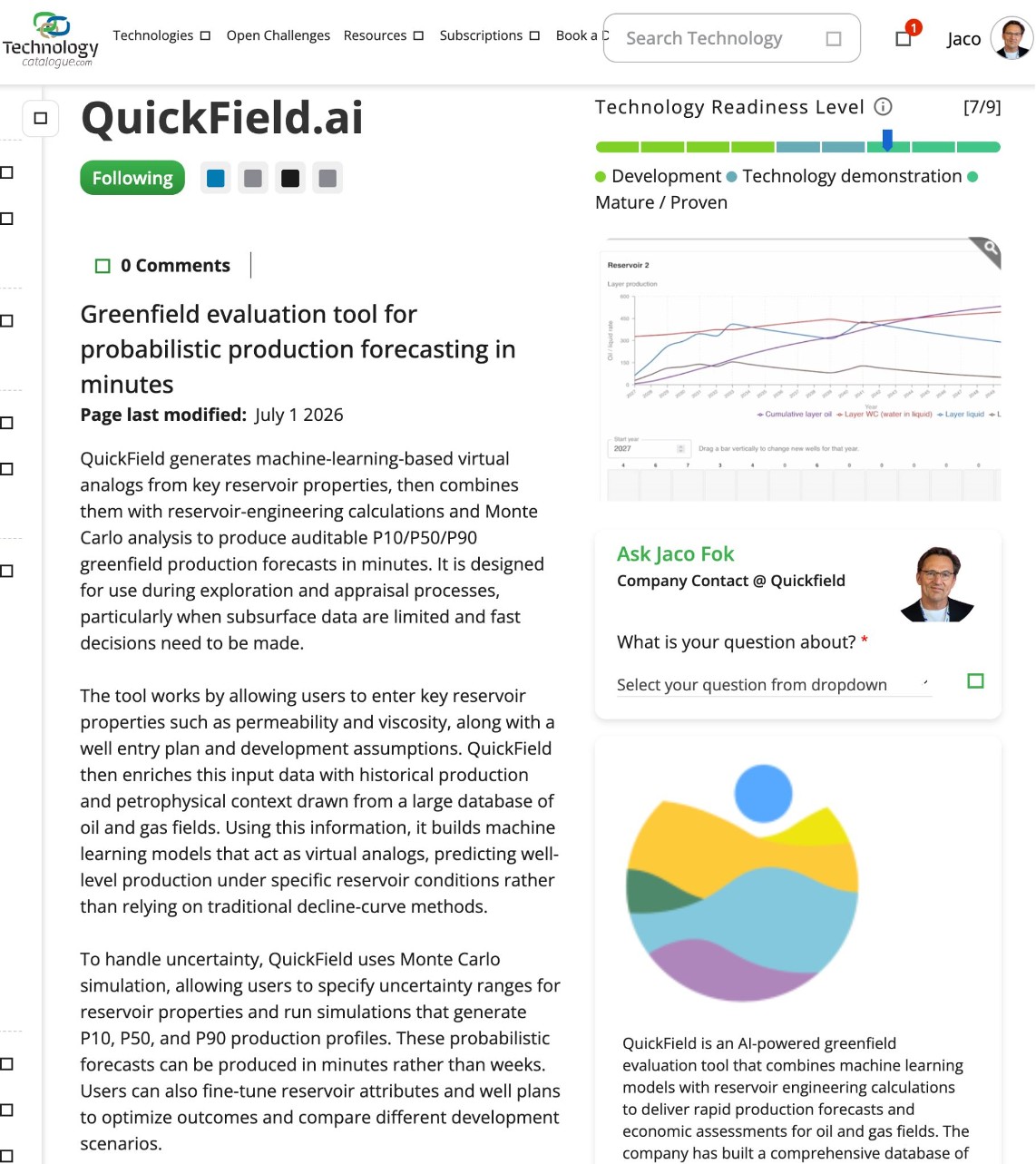
QuickField is now listed among vetted technology vendors serving exploration and development.
Read the post →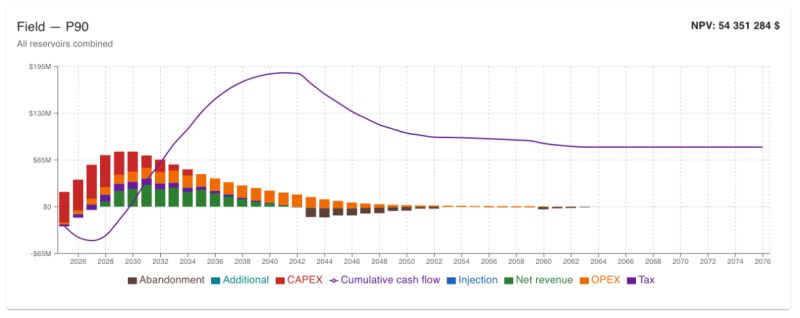
Public economic templates are live — apply one to see where development stops being profitable.
Read the post →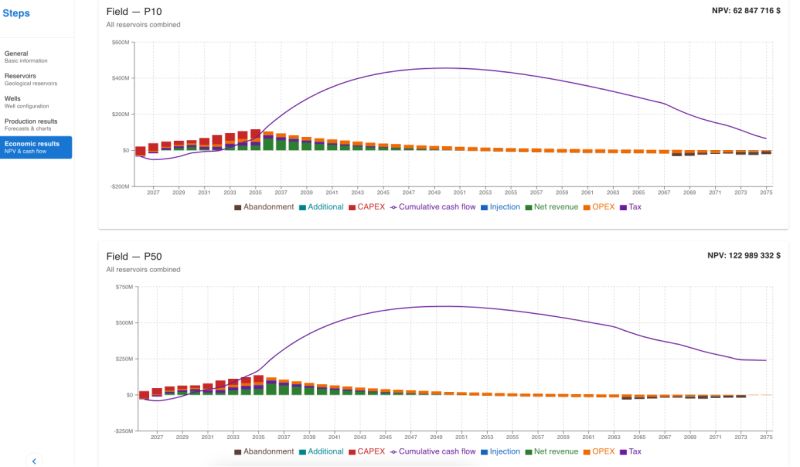
Injection well planning, faster well saving, and economic evaluation applied to every forecast case.
Read the post →
What is coming next: injection well planning, and economics so a plan can be judged against business goals.
Read the post →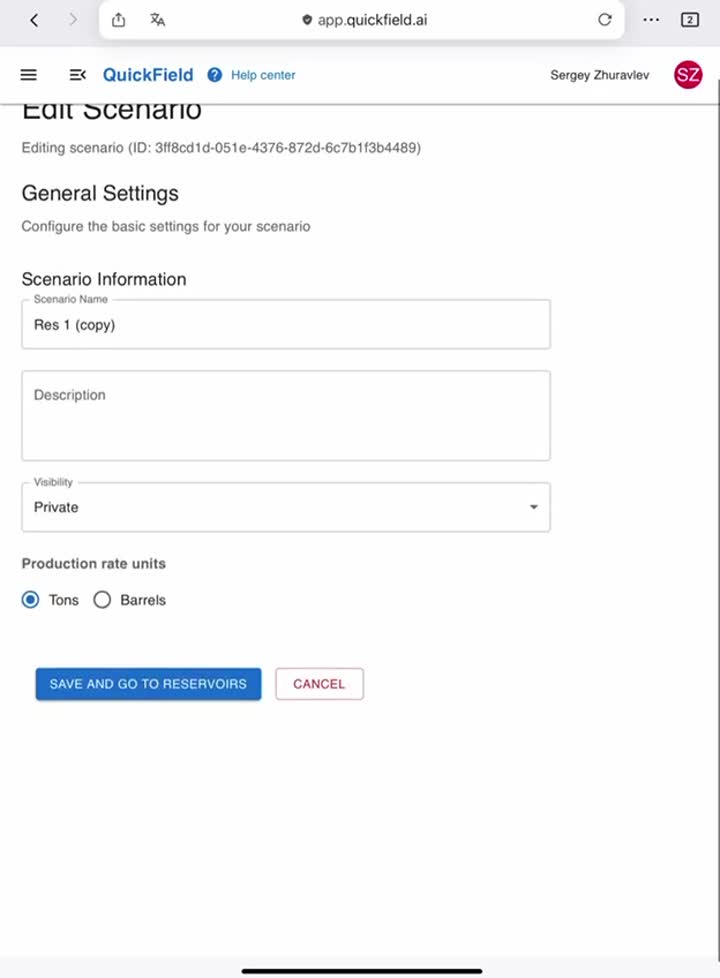
QuickField has a mobile version — the full workflow demoed on an iPad, and it works on a phone too.
Read the post →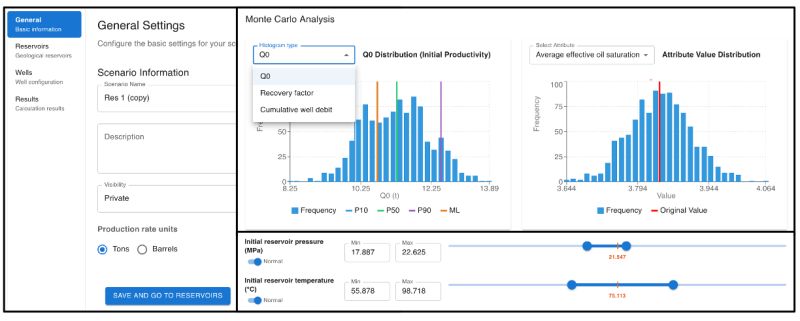
Strong engineering without a complicated interface, plus five updates to the scenario workflow.
Read the post →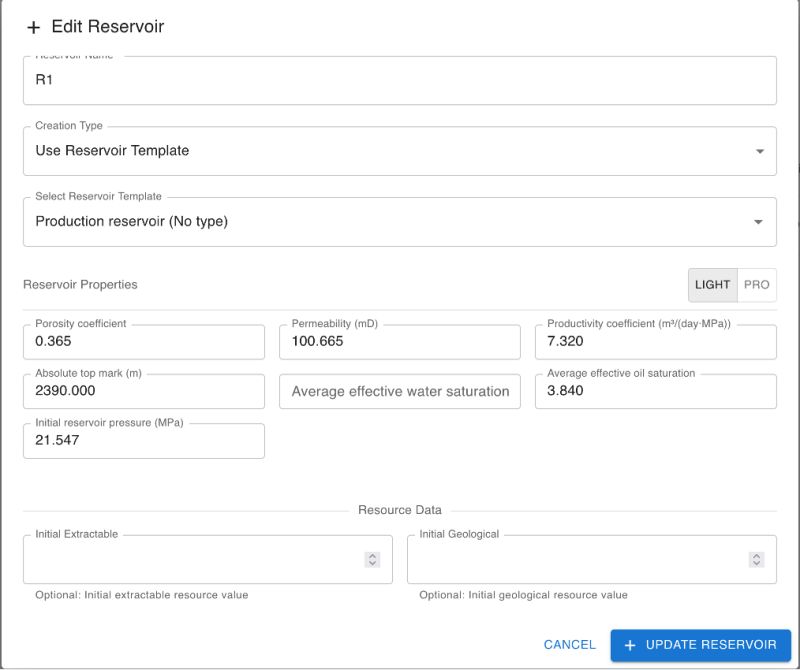
Template and import fixes, a lighter attribute view, and per-attribute deviations for Monte Carlo.
Read the post →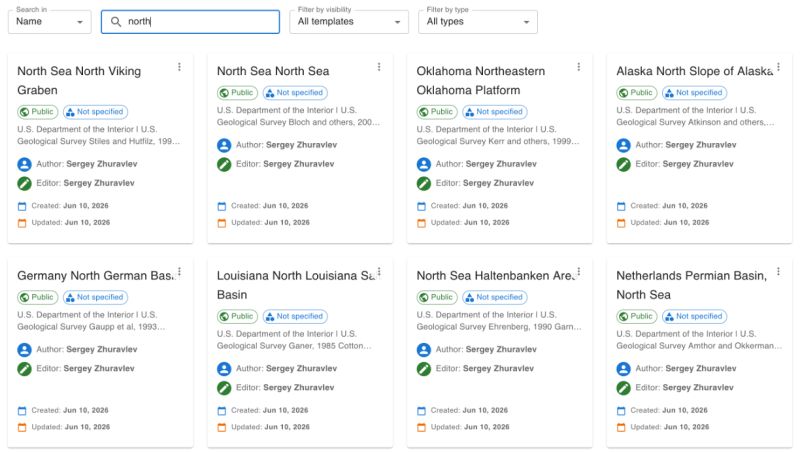
Over 50 reservoir templates added across regions, and search now covers descriptions as well as names.
Read the post →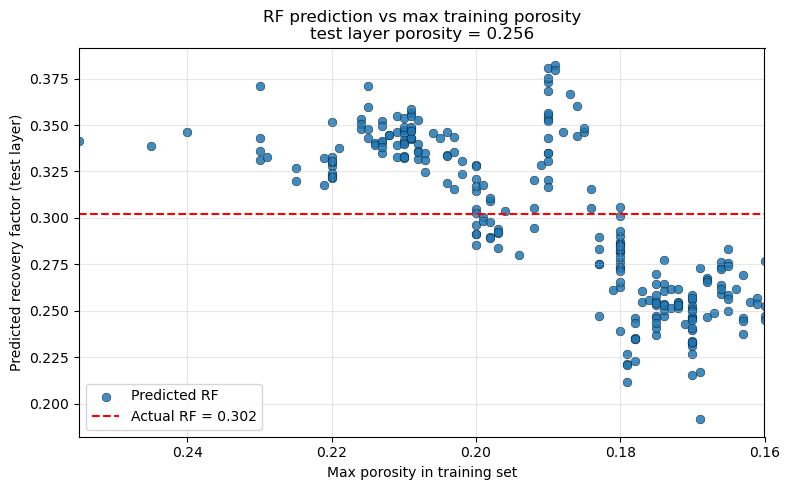
Tested on 302 layers: forecasts hold to roughly 35% beyond the training range, then turn risky.
Read the post →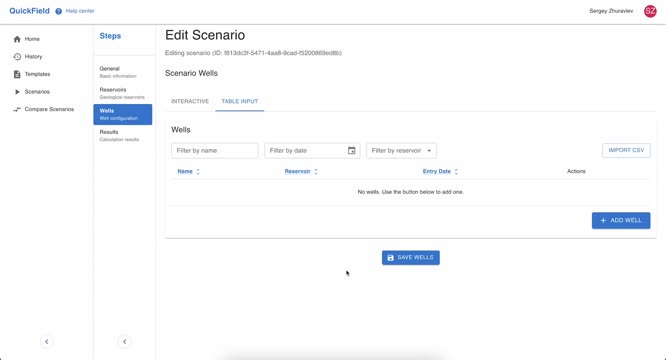
Well entry plans now import from CSV in three steps — pick the file, map the dates, save and edit.
Read the post →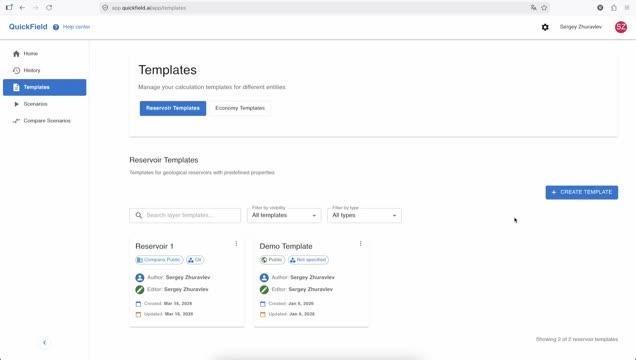
Templates become a knowledge base: copy public ones, export to CSV, import your own with auto-mapping.
Read the post →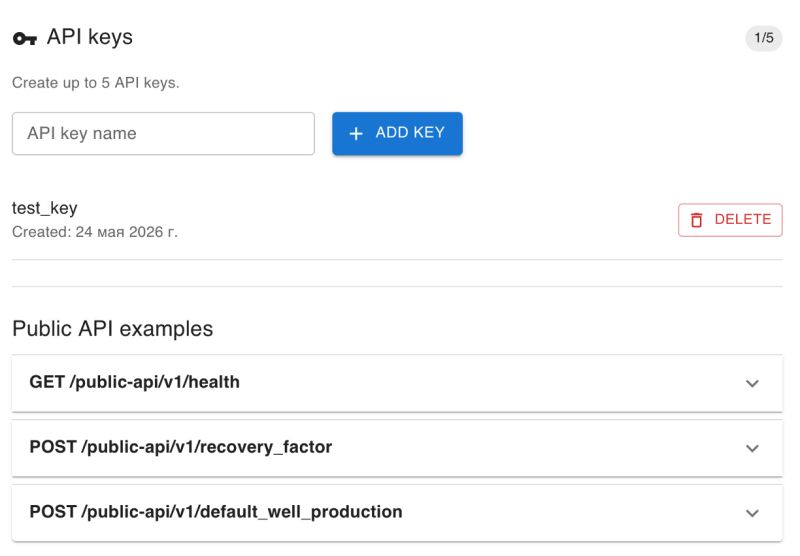
The public API is live. Create up to five keys and pull QuickField results into your own tooling.
Read the post →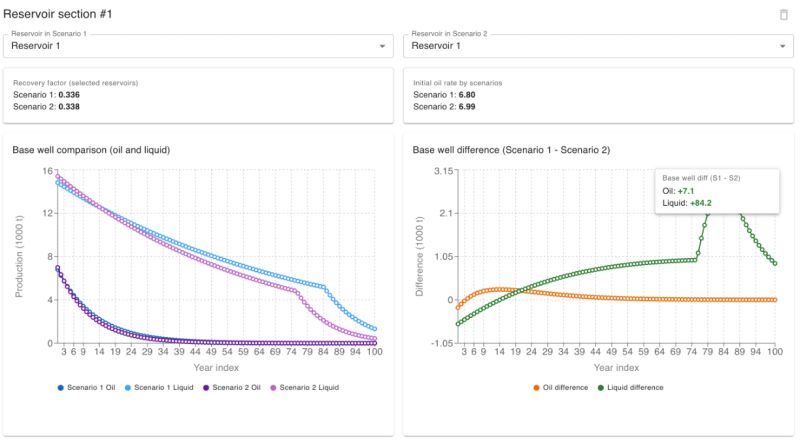
Cached models for faster recalculation, dimensions for attributes, and side-by-side scenario comparison.
Read the post →Classic ML rather than an LLM, so the same inputs always return the same result — and your data stays yours.
Read the post →
An open call for testers: analysts and specialists working with geology and petrophysics, on real cases.
Read the post →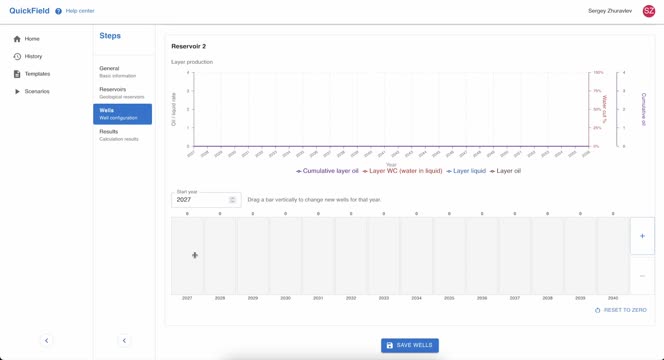
An interactive tool for creating and bulk-editing wells, with production estimates as you go.
Read the post →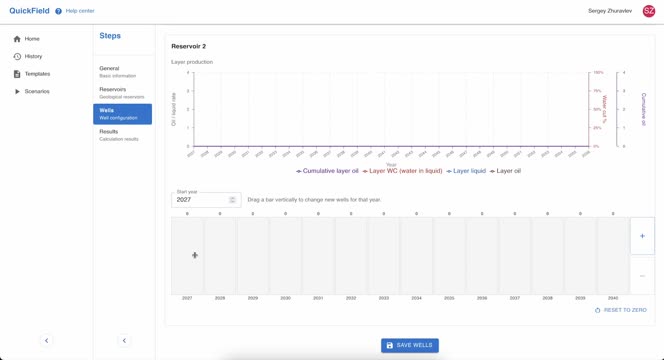
A first-pass drilling plan usually takes days. Built on historical data, it arrives in seconds.
Read the post →Data collection and analog hunting cost hundreds of hours. A few petrophysical inputs are now enough.
Read the post →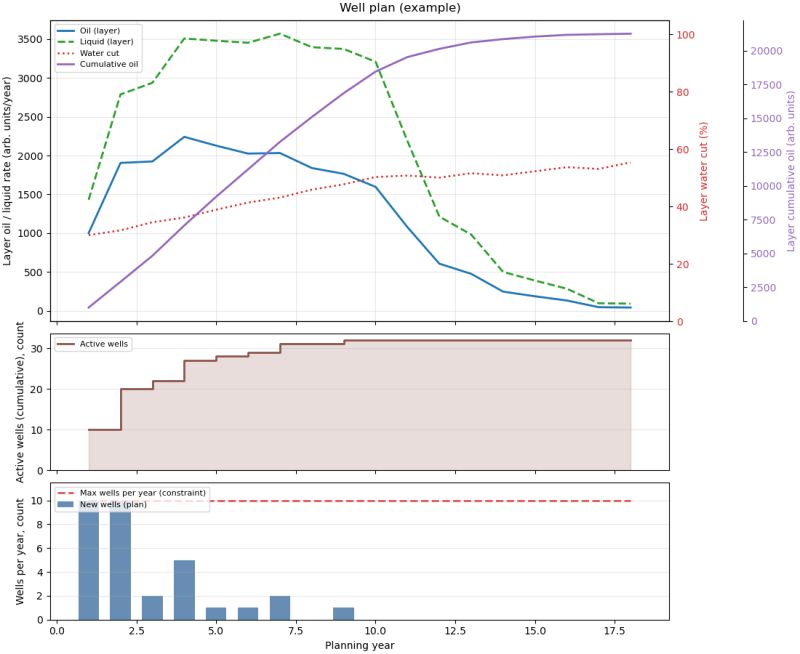
An auto-generated drilling plan is coming: set your constraints and a target, get a plan back.
Read the post →
Scenario building is no longer only for petrophysicists — and five attributes land within 2% error.
Read the post →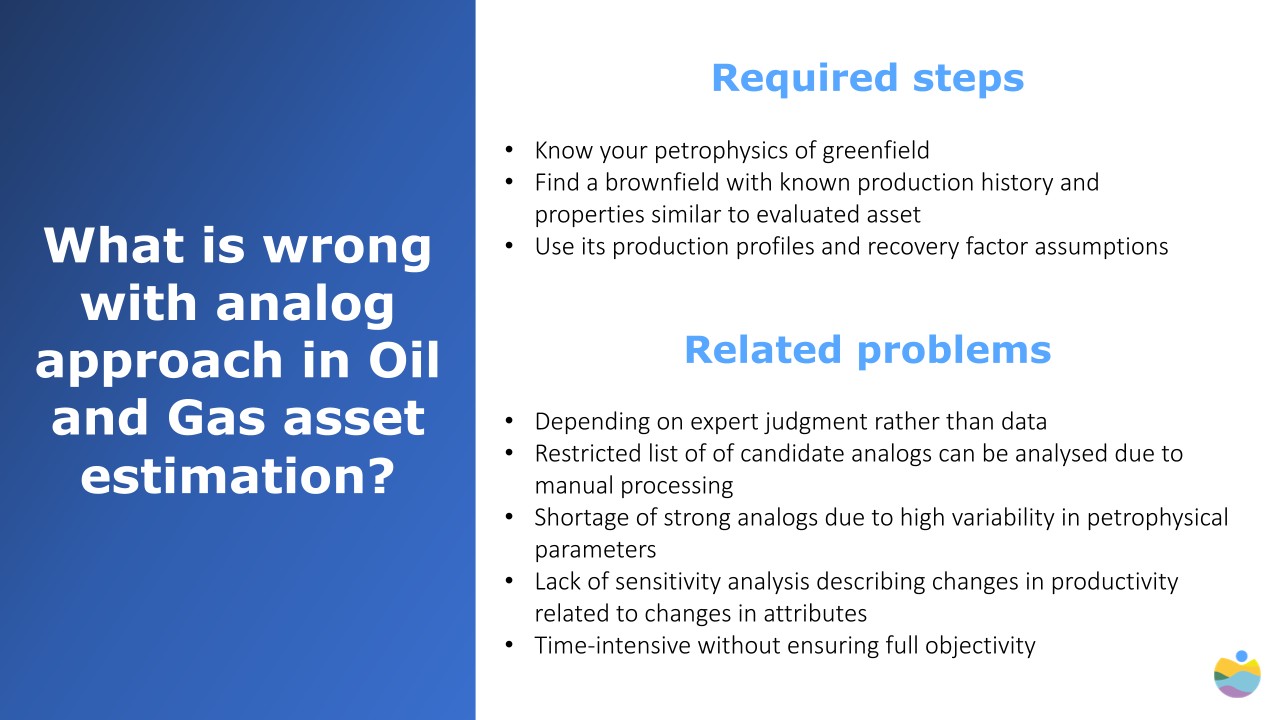
Machine learning combined with classical engineering equations, deliberately transparent throughout.
Read the post →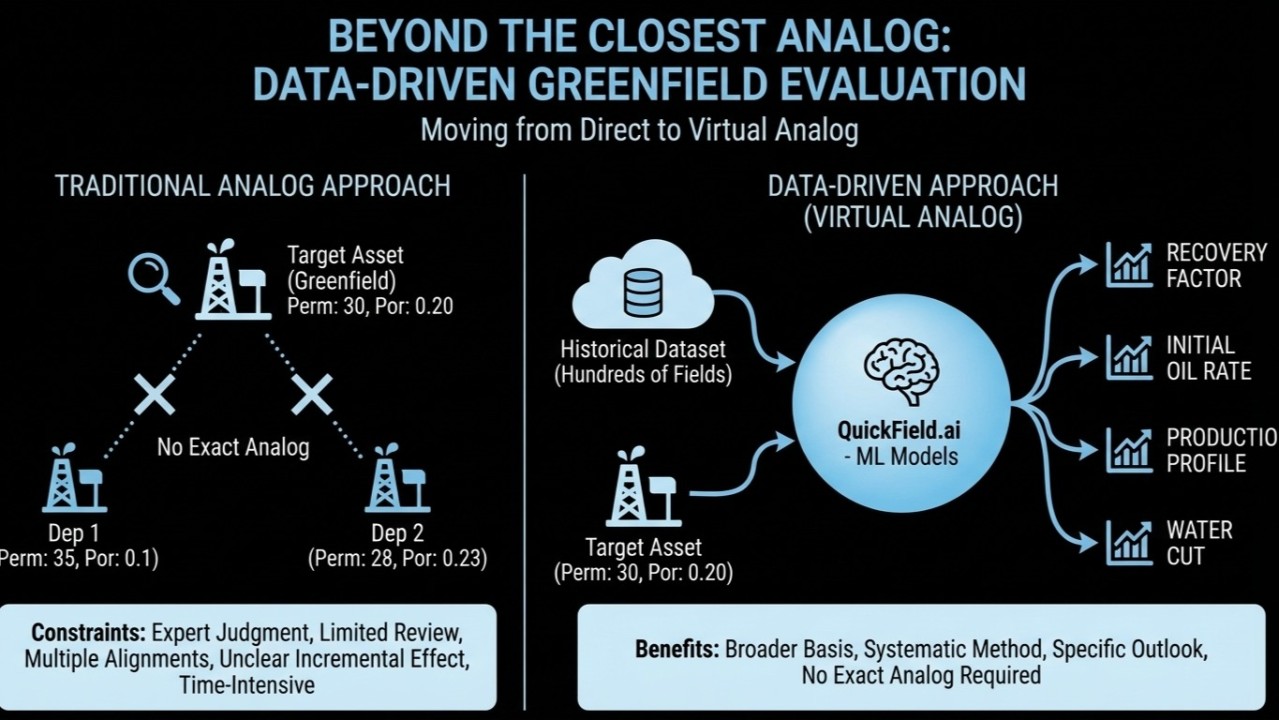
There is rarely an exact analog. Virtual analogs from historical data replace the subjective search.
Read the post →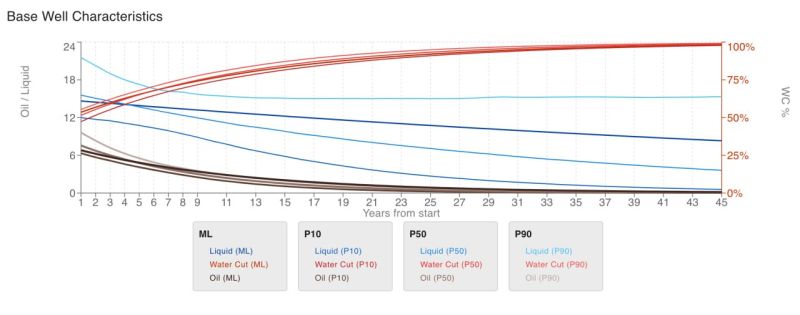
Only 27% of 2025's high-impact wildcats succeeded, and barely half the discovered volume is commercial.
Read the post →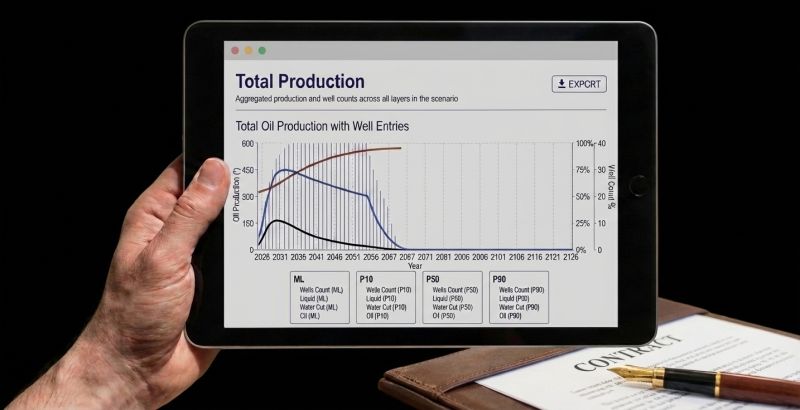
A 20% cost increase can add over $15/bbl to breakeven. Slow screening cycles no longer fit the market.
Read the post →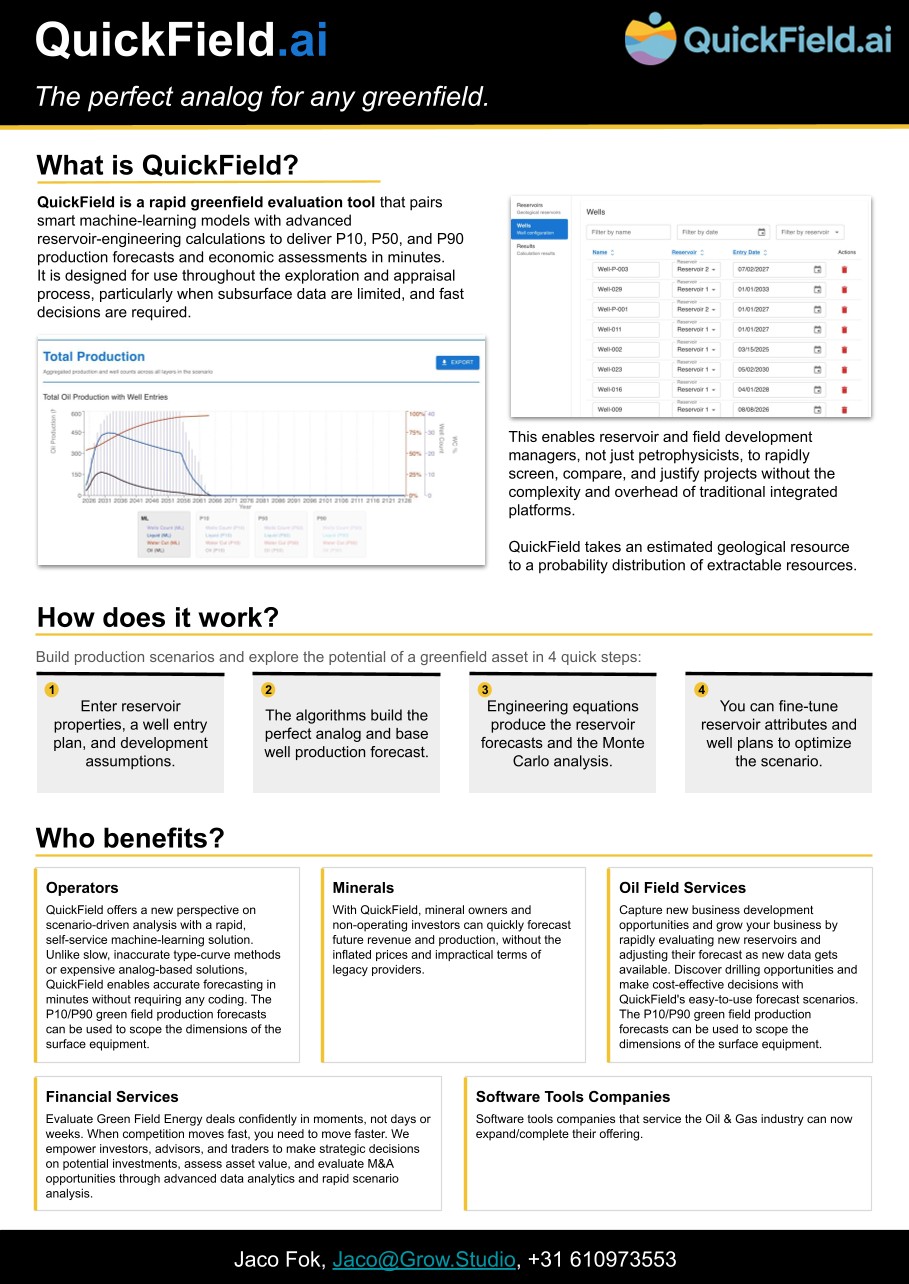
The short version: ML plus reservoir engineering, giving P10, P50 and P90 forecasts in minutes.
Read the post →No posts match that combination yet.