
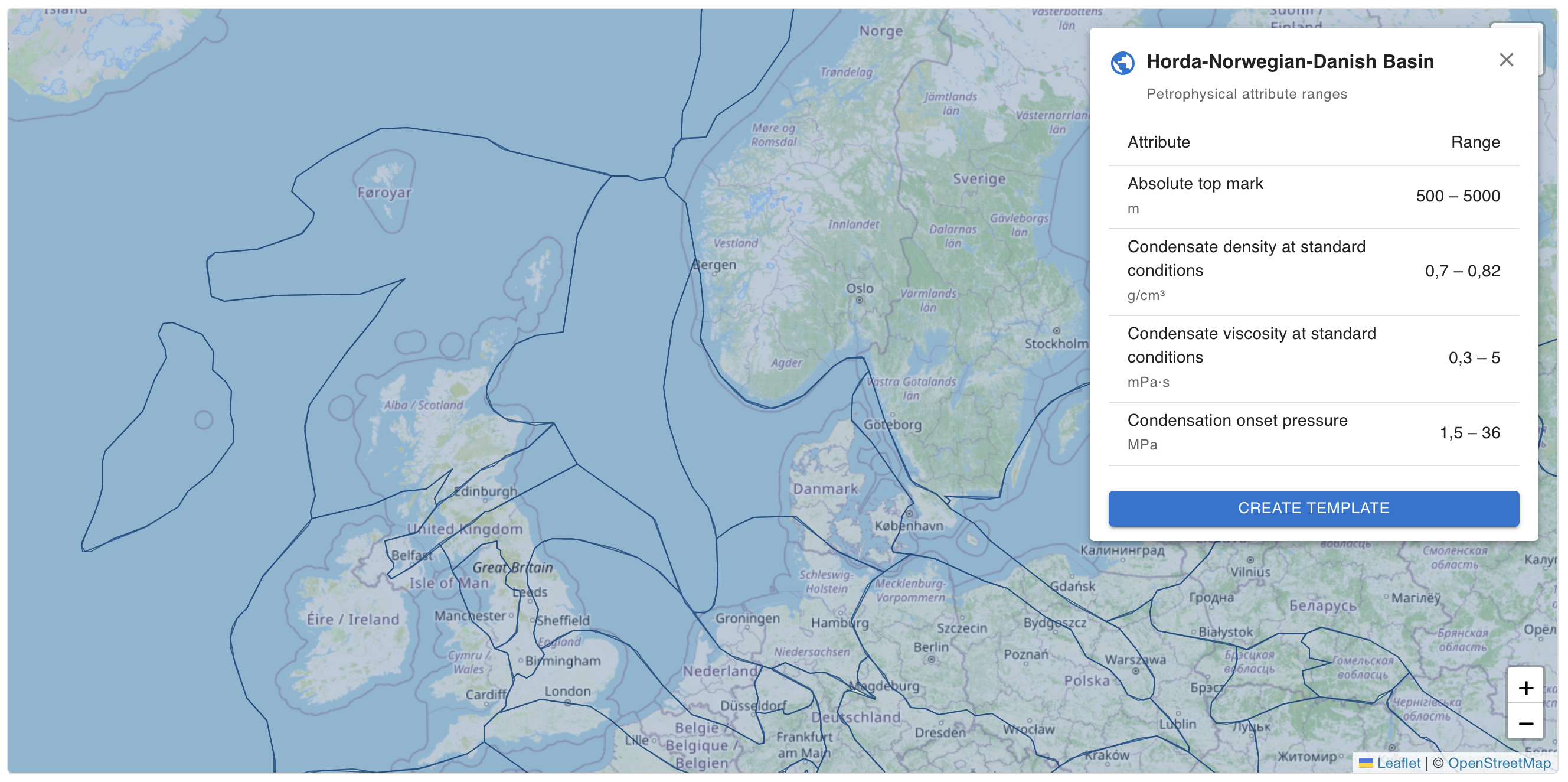
Open databases
Basin and province coverage drawn from open geological and production databases — the foundation for matching analogs at regional scale.
Exploration-to-appraisal workbench · Oil & gas
QuickField is a data-driven workbench for evaluating discoveries when subsurface data are still limited and a good development analog may not exist. Machine learning builds the type-well. You still choose the drilling plan, the economics.
Start after discovery. Refine the same assessment through appraisal.
The exploration problem
Early field decisions still need quantitative answers. Traditional analog methods become weakest precisely where frontier and data-sparse discoveries create the most uncertainty.
Validated against known outcomes
Historical reservoirs were held out one at a time. QuickField predicted production behaviour and recovery using the remaining data, then the predictions were compared with known outcomes.
One workbench
QuickField is the working environment around the decision, not a single AI prediction. The same asset evaluation becomes richer as appraisal progresses — from petrophysics and a type-well through drilling schedule, cash flow, and NPV.
Petrophysics, PVT, reservoir assumptions and an early well-entry concept. Sparse data is expected.
Use historical reservoir behaviour and ML instead of relying on one or two manually selected comparables.
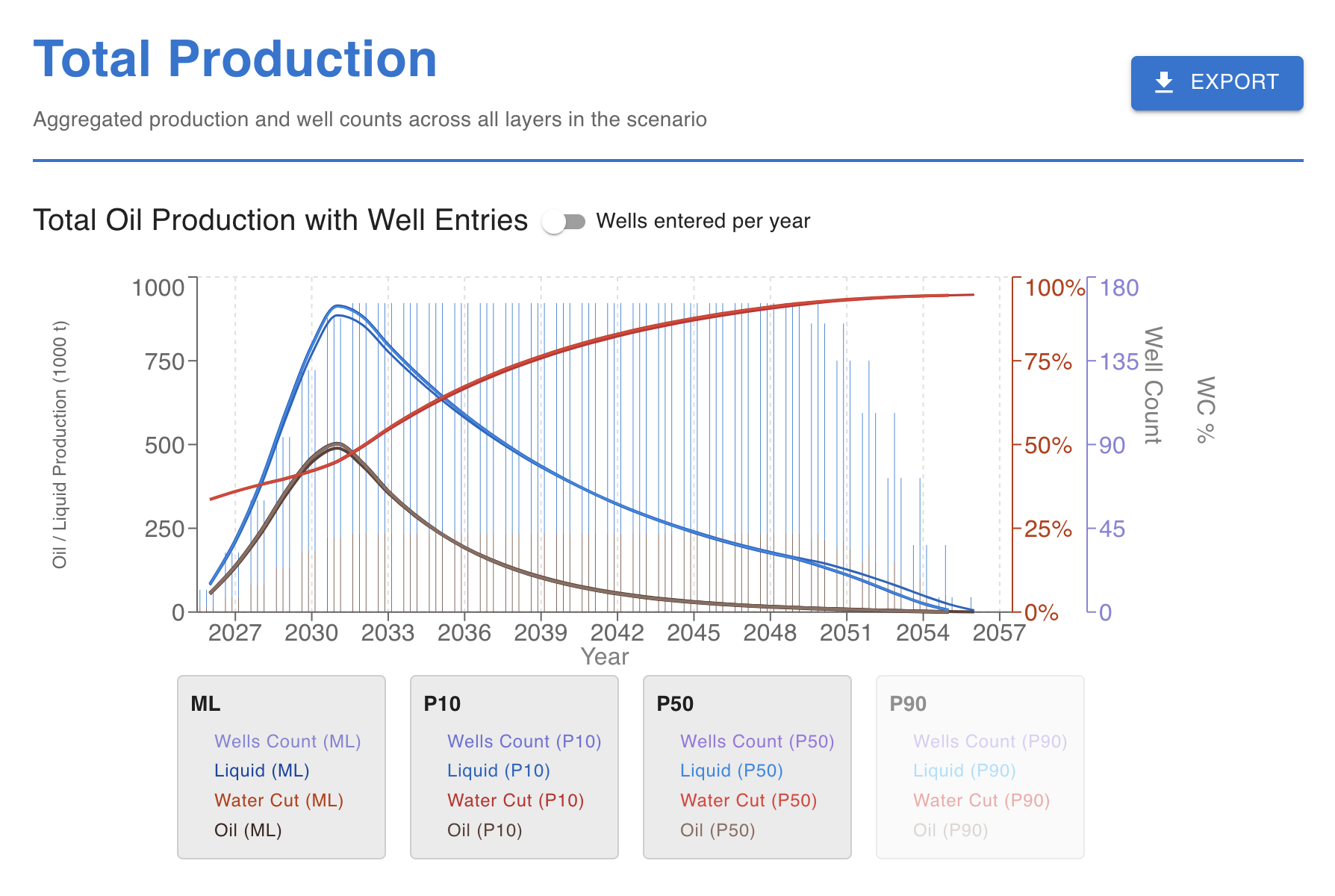
Estimate recovery factor, well production, oil and liquid rates, and water-cut evolution.
Run ranges and Monte Carlo to produce P10/P50/P90 outcomes and sensitivity to assumptions.
Change well count, timing and reservoir assumptions and compare alternatives in seconds.
Connect subsurface uncertainty to cash flow, NPV and early investment decisions.
Update the same assessment as new wells and better reservoir information become available.
Add capabilities around the exploration-geologist workflow without changing the core mental model.
Data foundation
QuickField is trained on open databases and public reports from oil and gas fields worldwide. For every field in our database you can inspect cumulative production history and the well operating model used to build analogs. Independents can start there. Operators can add company data behind their own tenancy.
Basin and province coverage drawn from open geological and production databases — the foundation for matching analogs at regional scale.
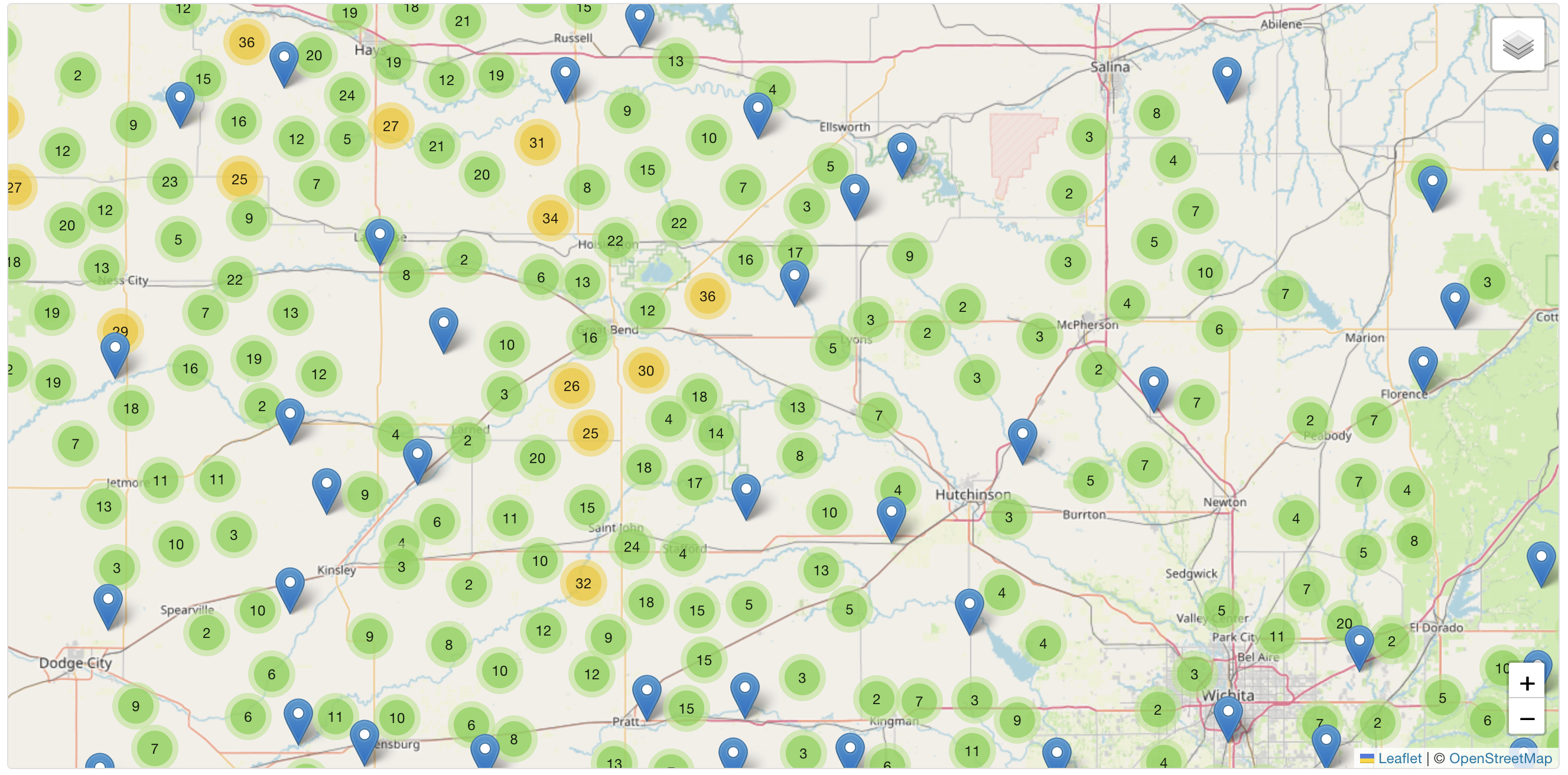
Field inventories and production records compiled from public reports, so every analog is grounded in documented historical performance.
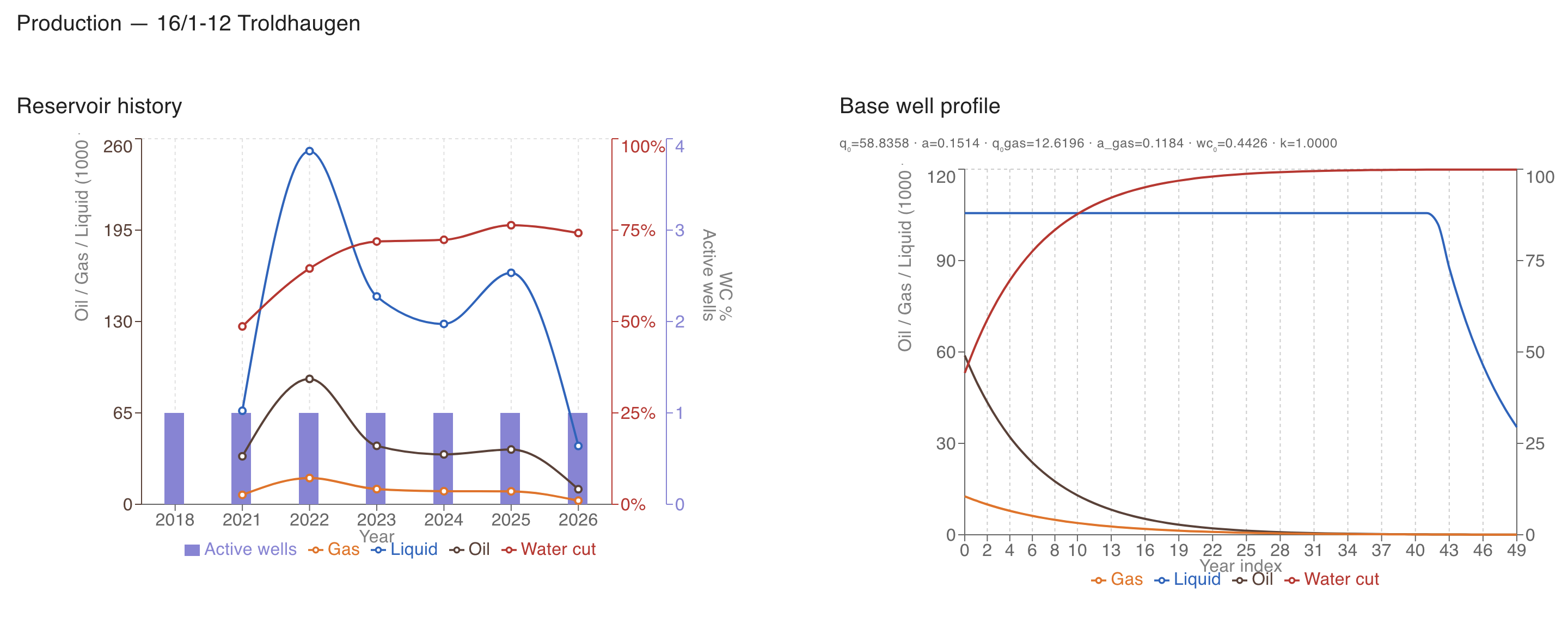
For each field in the database you can review cumulative production and the well operating model — the same building blocks used to construct your analog.
What you get
QuickField brings historical data, templates, drilling plans, ML forecasts and cash flow into one screening environment — so a greenfield case can be built, revised and compared in minutes.
Thousands of fields worldwide, with production history and well operating models you can inspect and use as analogs.
Basin and province property ranges on the map — context for analog search and for setting layer attributes.
A protected store for your own fields and production history, isolated in the company tenancy and available as private analogs.
Reusable layer and cost presets so multi-iteration screening uses the same standards instead of re-entering assumptions each time.
Producers and injectors by year, start dates and injection ratio. Change the plan and production, water-cut and NPV update with it.
Oil production, water-cut and recovery factor at well, reservoir and field scale, with checks that let you validate the ML calculations.
Sample reservoir assumptions to get P10, P50 and P90 profiles and see which inputs move recovery and rates.
CAPEX, OPEX, oil price, injection, royalty, tax, discount rate and abandonment — NPV and cash flow on the same case, in tonnes or barrels.
Download calculated results in standard formats (CSV / ZIP) for spreadsheets, data rooms and internal tools.
Who it is for
Screen a discovery on our catalog from day one.
Public fields and the petrophysical atlas are ready out of the box.
Open the workbenchRun the same screening on your own production history.
Load your production history so the forecast sits on data you already trust.
Open the workbenchEvaluate more cases without rebuilding the analysis each time.
Test QuickField on a historical client-style case before using it live.
Benchmark a client caseTwo ways to build the type-well
The value of QuickField is a data-driven type-well: models trained on historical reservoirs, scaled with reservoir-engineering calculations, then sampled with Monte Carlo. That is the default path from sparse petrophysics to a production range. If you prefer to assemble the curve yourself, manual analog mode keeps the same drilling schedule and economics — with inspectable spaghetti plots instead of a model score.
Core value
Use machine learning where historical data carry useful predictive signal. The model constructs a virtual analog from reservoir properties, then engineering relationships turn that well curve into a field forecast under your drilling plan.
Optional control
When you want to steer the type-well yourself, pick historical analogs and aggregate the curves. The drilling schedule and economics stay the same as in ML mode.
A fair first test
Choose a historical discovery. Share only the information that would have been available at the time, and keep later production history to yourself. We run the assessment, then you compare it with what actually happened — or with your own estimate.
No polished demo case. Your geology. Your benchmark.
Get in touch
Tell us about the asset and where you are in the appraisal process — we will show you what QuickField makes of it.
From an estimated geological resource to a probability distribution of extractable resources — then a drilling plan and NPV you can defend.
Book a demoAlready a user? Open the application →